
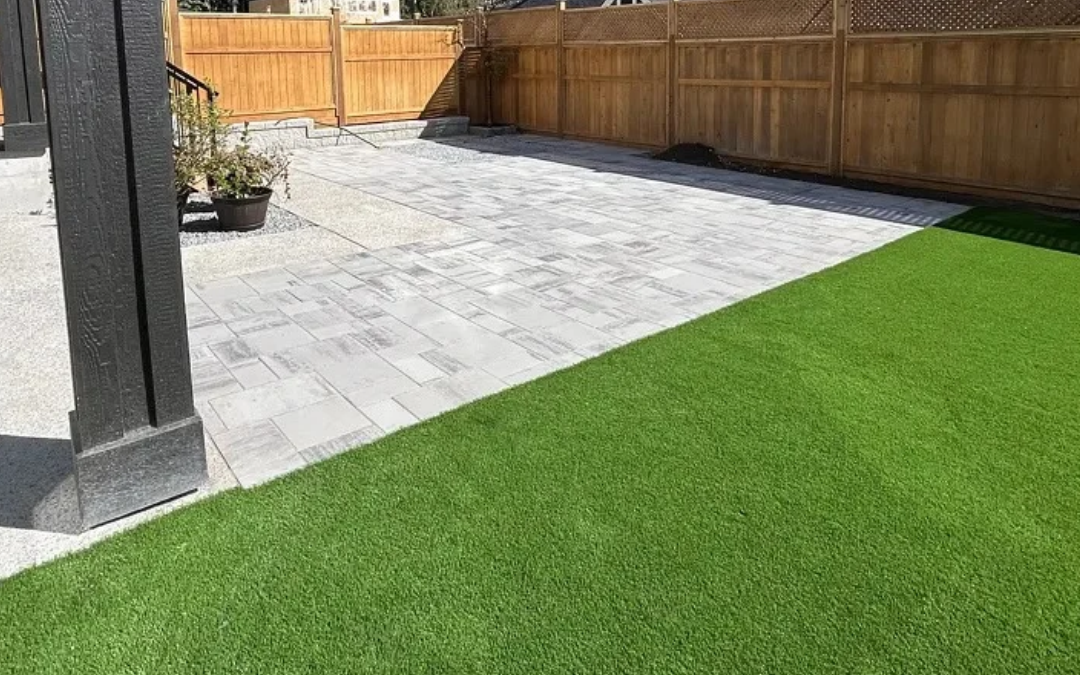
A sloped backyard is usually the one nobody uses. The grass is patchy, the bottom of the hill stays soggy through the wet season, and the kids end up playing in the driveway instead. If that sounds familiar, a common question is this: can artificial grass be installed on a slope, or does the slope have to go first?
Both can work, and which one makes sense depends on the yard. First, why slopes are so hard on a regular lawn.
F
Why Grass Struggles on a Slope
Water doesn’t stay where it lands. On a slope, rain runs downhill before the soil has a chance to soak it up, so the top of the hill tends to dry out while the bottom stays saturated. Neither extreme is good for grass. Dry soil starves it of water, and waterlogged soil cuts roots off from oxygen, which they need to take in water and nutrients.
Then there’s erosion. Gravity pulls water and soil downhill together, and the topsoil that washes away is the same soil grass needs to grow. Over time, roots get exposed and bare patches start to show up. In a place like BC, where the rain comes steadily through fall and winter, a slope that’s already struggling doesn’t get much of a break.
Mowing is its own problem. Pushing a mower up and down a hill is tiring at best, and fertilizing and weeding aren’t any easier.
The part that worries parents and dog owners most, though, is safety. Wet grass on a slope is slippery, and kids and dogs running downhill don’t exactly slow down. Slopes that face north and get little sun stay damp longer, so the slick ground sticks around. Add mud to that and the yard gets hard to use for most of the fall and winter.
There are two ways we’d suggest dealing with it.
F
Option 1: Take the Slope Out
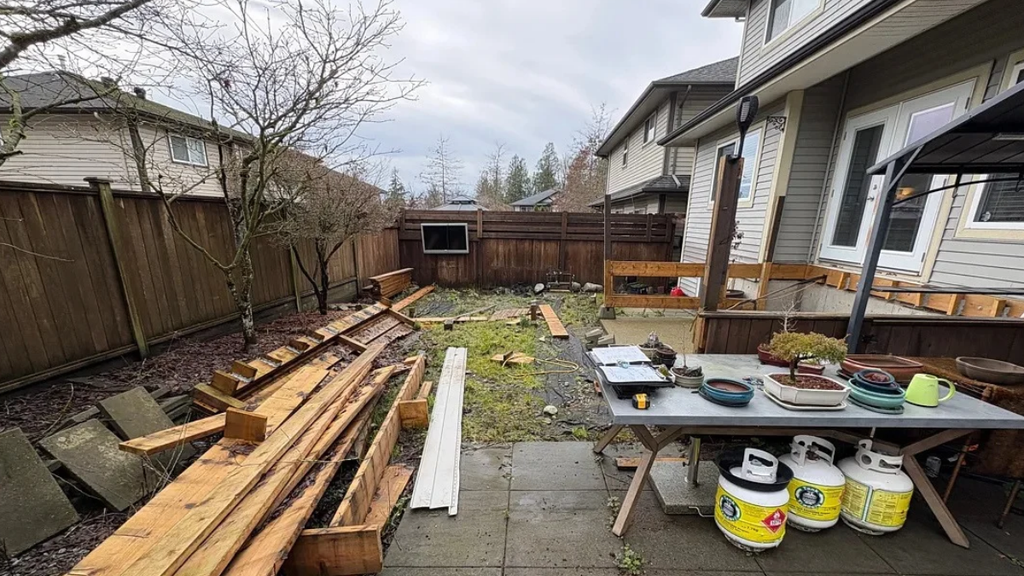
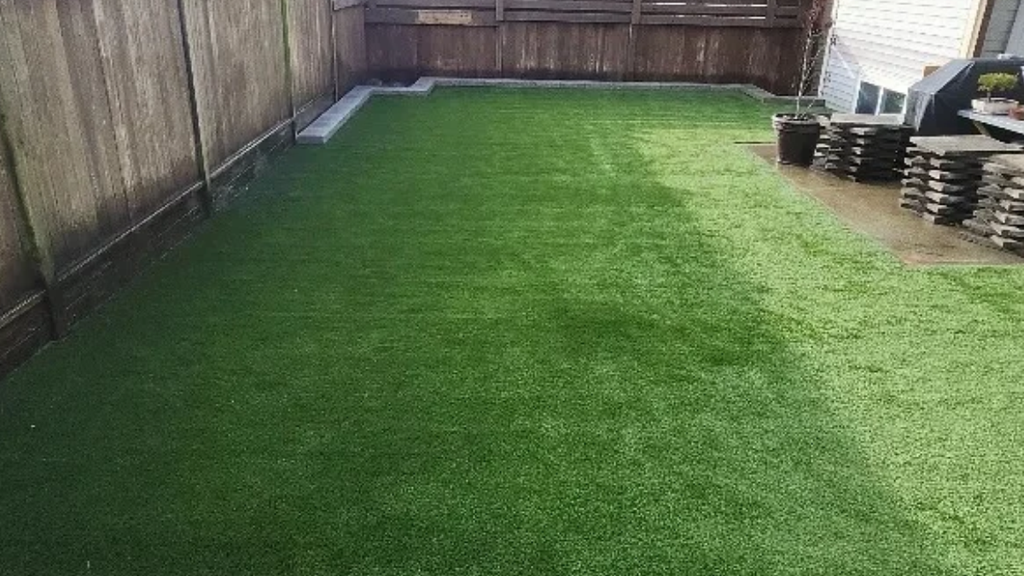
The first option is to remove the slope entirely. That means excavating, cutting the ground down to a flat, level grade, and then building the turf installation on top of it.
North Western Synthetic Grass (NWSG), GrandGrass’s sister brand that handles landscaping construction and artificial grass installation, did exactly this on a project in Maple Ridge this year. The backyard had a slope that caused drainage problems, enough that the yard was close to unusable. At the base stage, the team excavated, removed the slope, built a flat surface, and installed the turf on top. It’s more work up front than just rolling turf over what’s there, but the end result is a flat yard that’s actually usable.
A job like this needs a retaining wall. When you dig out the high side of a slope, you’re left with a raw edge of soil, and that soil wants to slide back down. The wall holds it in place. It also protects that exposed edge from being washed away by rain, and it keeps whatever sits on the higher ground, like a fence, a patio, or the house, from losing its support. Wet soil is heavier and pushes harder, which matters here in BC.
Drainage behind the wall matters as much as the wall itself. Water trapped behind it builds up pressure, and poor drainage is among the most common reasons retaining walls fail. That’s why a properly built wall includes gravel backfill, drain pipe, and weep holes, not just stacked blocks. Taller walls can also come with engineering and permit requirements that vary by municipality, so it’s worth checking before any digging starts.
–
Option 2: Keep the Slope
The other option is to leave the slope as it is and install turf on it. So, can artificial grass be installed on a slope without changing the grade? Yes, and installers do it regularly. It generally means less groundwork than excavating and building a wall, though it takes more care than a flat install.
The process starts the same way as any install. The existing grass comes out, and the slope is smoothed so there are no dips or lumps, since turf will show whatever is underneath it. A compacted base goes in next, following the slope. It has to be packed firmly, because anything that shifts underneath will shift the turf with it.
From there, the main difference is keeping everything in place. Edging, often timber, goes around the perimeter so the turf doesn’t creep, and on bigger areas installers sometimes add edging across the slope as well, not just at the top and bottom. The turf is rolled out and left to settle, with the seams planned around the fall of the slope, and then it’s pinned down in sections. Turf on a slope needs more fastening than turf on flat ground, with extra anchoring near the top, along the seams, and at the bottom. A heavier layer of infill finishes the job by weighing the turf down into the incline and helping the blades stand up.
Where the water goes at the bottom of the slope needs planning too. It’s easy to overlook, and it’s one of the common mistakes on these installs.
How Steep Is Too Steep?
There isn’t one agreed-upon number. Gentle slopes can often be done with standard methods. Steeper grades need more anchoring and a reinforced base, and very steep or long runs are sometimes broken up with terraces or landings to interrupt the pull of gravity. Some suppliers say turf can go on grades as steep as 40 degrees with the right preparation, but that’s the upper end of what gets claimed, and every yard has its own soil, length of slope, and water flow to account for. Someone needs to look at the actual yard to say what’s realistic.
–
Which One Fits Your Yard?
If the slope is why the yard doesn’t drain or can’t be used, removing it deals with the cause, and the retaining wall is part of the cost. If the slope is manageable and you mainly want a lawn that stays green and doesn’t turn to mud, installing on the slope can be the simpler route.
Either way, it starts with looking at the yard in person: how steep it is, where the water goes, and what sits above and below the slope.
Have a sloped yard or a sloped job coming up? Send us a few photos and the rough size of the area, and we’ll help you work out which route makes sense. GrandGrass can help with the turf, and our sister brand NWSG handles the retaining walls and installation side.