
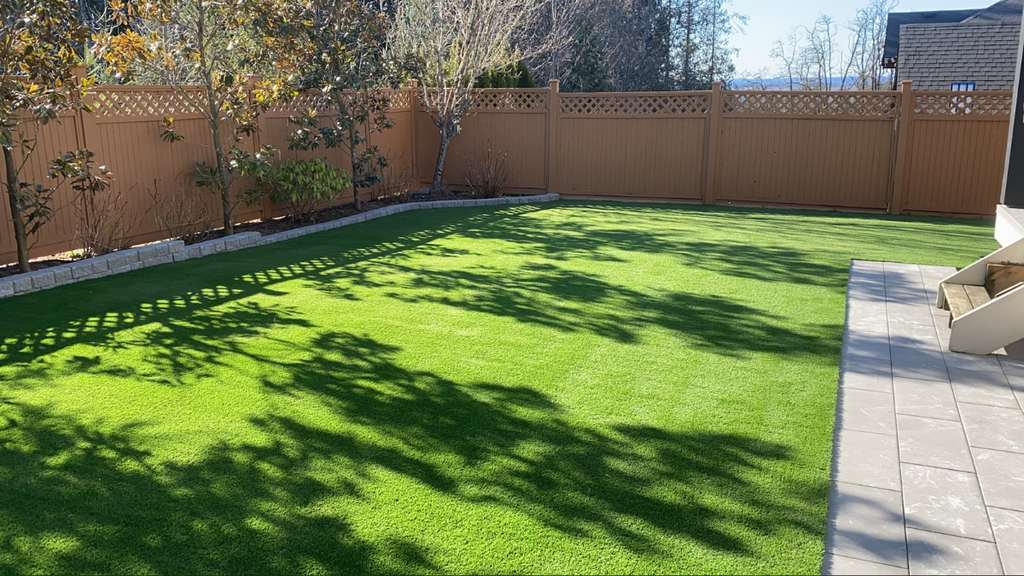
When people compare artificial grass, they usually look at pile height, color, and price. Infill rarely comes up until the install is already being planned, and then the questions start. Do we need it? Is plain sand fine? Does it matter if there’s a dog?
Artificial turf infill is the layer of granules spread and brushed in between the blades once the turf is down. It’s easy to overlook, but it affects how the lawn looks, feels, and holds up over time. This post covers what it does and how to choose between the two options we see most often, silica sand and zeolite.
/
What Infill Does and Whether You Need It
Turf blades are light and tend to lean over, especially in high-use spots. Infill sits between them and holds them upright, which is a big part of why a lawn looks full instead of flat. It also adds weight, so the turf stays put as the backing expands and contracts with temperature changes. And it gives the surface a little cushioning underfoot.
In most installs, infill is needed. Without it, blades are more likely to lie flat and the turf can shift more easily. That said, the type and amount depend on the turf itself, including its pile height and construction, so the product spec is the best guide. If you’re not sure what a particular roll calls for, ask before the base work starts.
/
Silica Sand vs Zeolite
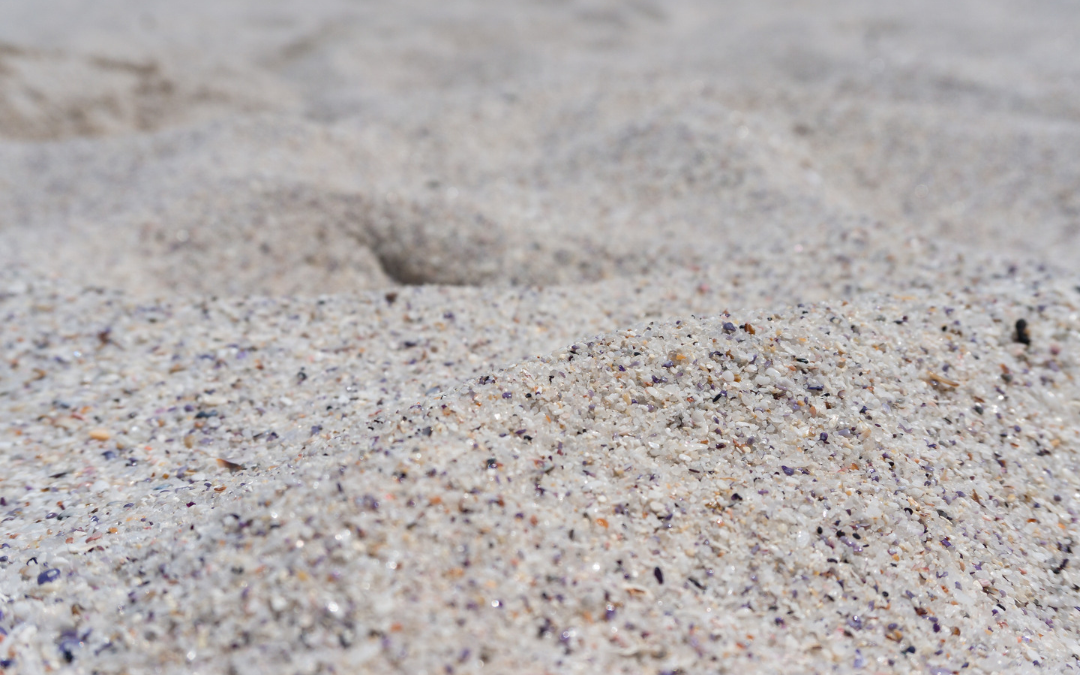
Silica sand is the most widely used infill and one of the most affordable. It handles the core jobs well, holding the blades up and weighing the turf down. A few things matter in practice. It should be kiln-dried silica made for turf, not beach sand or playground sand, which aren’t suited to the job. Angular sand can also compact over time in some setups, which is one more reason infill levels are worth checking down the road. For a standard yard without heavy pet use, silica sand is usually all you need.
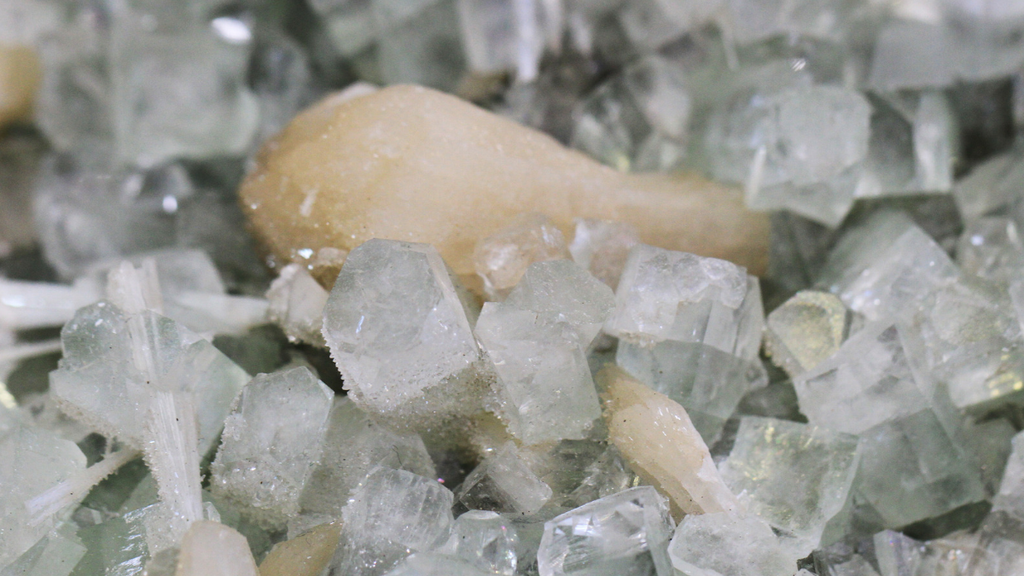
Zeolite is a natural mineral, and the reason it comes up so often is odor. It neutralizes ammonia, the compound behind that sharp smell from pet urine, and it helps limit bacteria buildup in the infill layer. That makes it a good fit for homes with dogs, which ties in with what we covered in our post on artificial grass for dogs. It doesn’t replace cleaning, though. Urine still needs to drain through the backing and get rinsed through, and the base still has to drain properly. What zeolite gives you is more margin on the odor side. Some installers also mix it with silica sand to balance cost, so the whole area doesn’t need to be full zeolite.
You may also see crumb rubber, which comes from ground-up tires, and EPDM rubber mentioned as infill options. These are mostly associated with sports fields, where shock absorption is a priority. GrandGrass doesn’t use rubber crumb. Our infill options are sand and natural minerals, so the choice usually comes down to silica sand or zeolite.
The right artificial turf infill depends mostly on who uses the space.
| Silica Sand | Zeolite | |
|---|---|---|
| Best for | Standard yards, low pet use | Homes with dogs |
| Main advantage | Affordable and widely used | Neutralizes ammonia odor |
| Cost | Lower | Higher |
For a yard where a dog uses the lawn every day, zeolite is worth the extra cost. For a front yard or a play area with no pets, silica sand does the job. A mix of the two works well for the spaces in between.
/
Keeping Infill in Shape
Infill isn’t a one-time thing. Over time it can thin out in high-traffic spots or settle down into the fibers, and the blades start leaning again. A light brushing helps, and topping up the infill where it’s low brings the turf back to how it was set up. Checking infill levels is also part of what TurfNew, our sister company, covers in its maintenance visits.
Choosing infill for an upcoming job? Reach out and tell us about the site, including whether pets will be using it, and we’ll help you match the right option to the turf.