
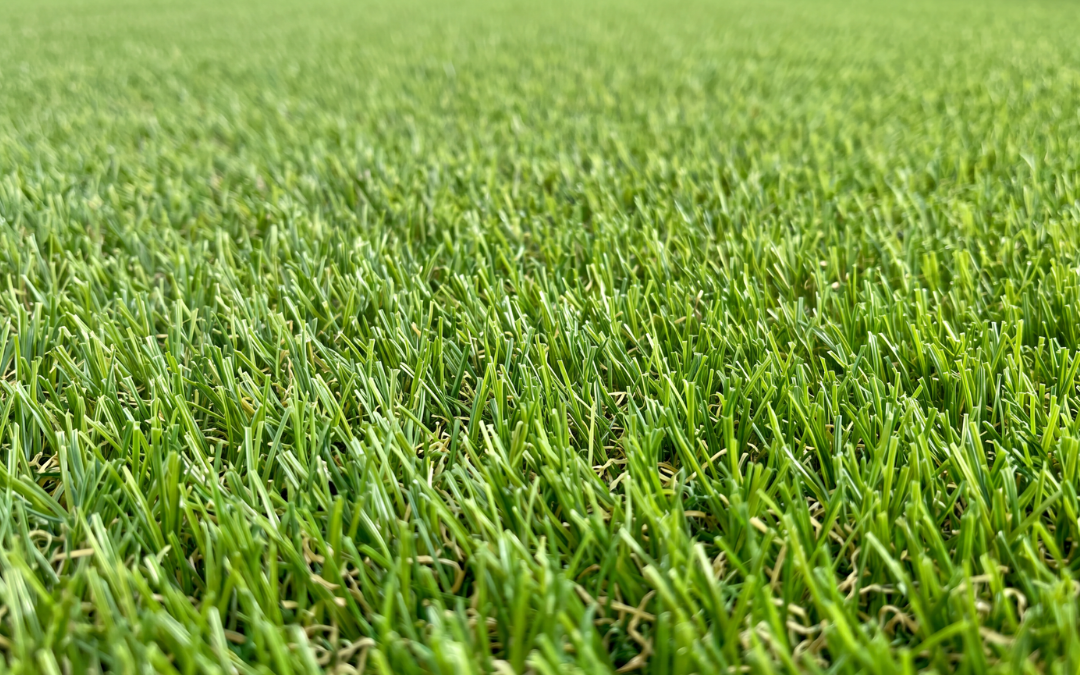
If you search for artificial grass cost, the numbers you find are all over the place. Part of that comes from the install and the site, but a good part comes from the turf itself. Two rolls can look alike on a shelf and still be built very differently, which is why a roll from a big-box store and a premium turf rarely sit at the same price.
This post goes through what separates them, so the number on a quote makes more sense. If you’re a contractor, it should also help when you need to explain a price difference to a client.
Face Weight Is the First Number to Check
Face weight is the weight of the yarn in one square yard of turf, not counting the backing. Most turf falls between 30 and 90 ounces, and residential products tend to land between 50 and 80. More yarn generally means a fuller, sturdier surface that handles foot traffic better, and it also means a higher price, since there is more material in every yard. To put the gap in perspective, one manufacturer notes that a 45 ounce turf is much less dense and sturdy than an 85 ounce one.
It helps to know the difference between face weight and total weight. Total weight includes the backing, so a product listed at 91 ounces can have a face weight of only 65, with the other 26 ounces being backing. When you compare two rolls, compare face weight to face weight. For reference, our premium M-shape turf has a face weight of 102 ounces and a total weight of 124 ounces.
Face weight also isn’t a pure measure of density. It comes from how tightly the blades are stitched, how tall they are, and how thick the yarn is. A taller blade adds weight without adding more blades, so pile height and stitch rate are worth checking alongside the number.
/
Color, Light, and Blade Shape
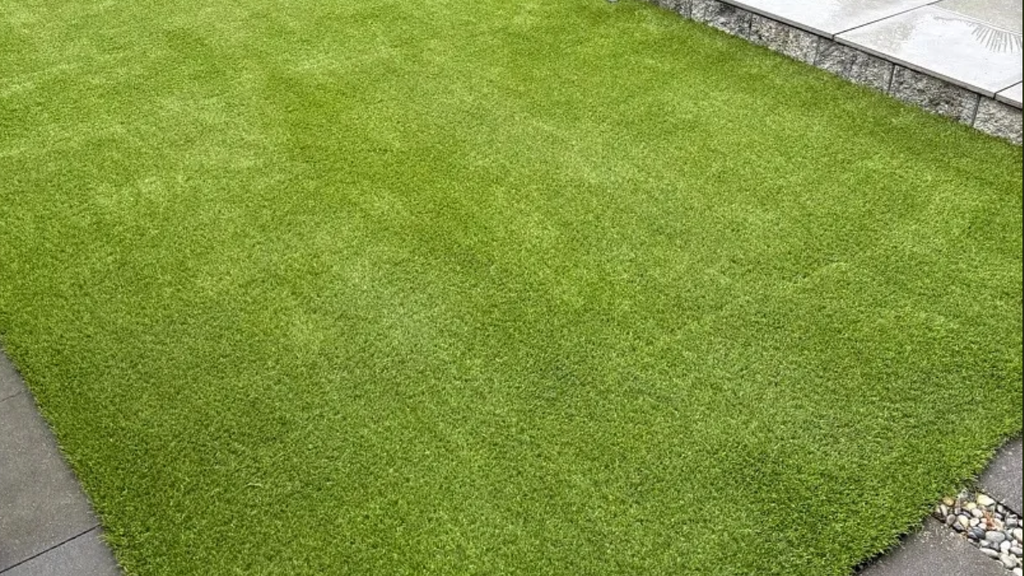
Most people can spot cheap turf from the street, and it usually comes down to light. Flat blades reflect light in one direction, which creates the uniform shine people associate with fake grass. Shaped blades, like the M-shape, scatter light in different directions and avoid that blanket reflection. Color matters too. Lower-quality turf is often one flat shade of bright green, while better products blend several tones so the lawn reads closer to real grass. Even good turf looks a little shinier when it’s brand new and settles down after some use.
This is part of why we pay attention to blade shape and color at GrandGrass. We cover our W-shape and M-shape turf in our post on artificial grass blade shapes, and we choose our colors with light reflection in mind, so there’s a shade that fits the look of each yard.
/
Backing and Drainage
The backing is easy to ignore because you never see it after the install, but it does two jobs. It holds the blades in place, and it lets water through. A weak backing can let fibers pull loose over time, which leaves a thin, patchy lawn. Backings are commonly made from latex or polyurethane, and polyurethane is generally the more durable of the two.
On drainage, hole spacing varies a lot between products. One industry source has seen holes anywhere from 2 to 8 inches apart, and more holes means better drainage. Turf with holes spaced far apart drains slowly and can lead to pooling. It’s tempting to assume the pricier turf always has more holes, but that isn’t a rule. Spacing is a design choice that differs by product, so the spec sheet is the thing to check, not the price tag. Many spec sheets list a drainage rate in inches per hour per square yard, which makes comparing products easier.
At GrandGrass, the drainage holes in our backing are evenly spaced, so water has a clear path down into the base. Our premium M-shape turf uses a perforated polyurethane backing and lists a water permeability of 68 inches per hour. The turf is only half of the picture, though. A fast-draining turf still needs a base that drains too, which we covered in our post on synthetic turf drainage.
/
Yarn, Warranty, and the Rest of the Price
Yarn material is another thing that moves the price. Polypropylene sits at the lowest price point but offers the least durability, and it suits areas without heavy foot traffic. Polyethylene and nylon are the two most durable types, and polyethylene is the softer, more natural-feeling of the two. Treatments applied to the yarn, such as reducing shine or heat, add to the price too.
Warranty is worth a look too. GrandGrass backs the turf we sell with a 10-year warranty. When you compare products, ask what the warranty covers, including whether the wording mentions things like UV stability and fiber loss.
Put together, a lower price on a roll often reflects less yarn, a lower-grade yarn material, simpler color, and a backing built to a lower spec. Each of these feeds into the artificial grass cost on a quote, and whether the difference matters depends on the job. It’s better to know what it is before comparing numbers.
Want the spec sheets for our turf? Get in touch and we’ll send over face weight, backing, and drainage details so you can compare them side by side with other options.